Case Study: How a Premium Snack Brand Generated 14,000 Bundle Orders with a Simple “Build Your Own Pack”
This is an anonymous case study based on a real BYOB merchant. Certain details have been generalized.
Merchant Profile
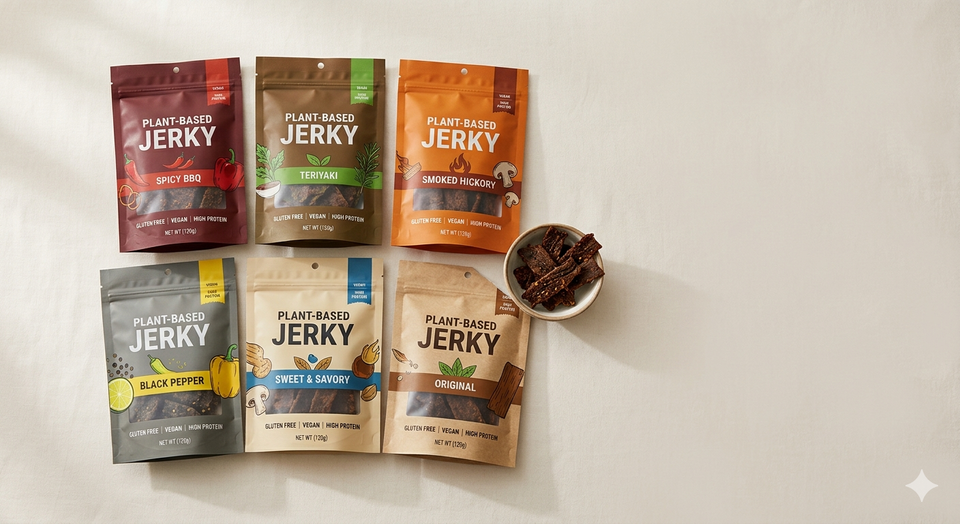
This US-based brand specializes in artisanal, plant-based jerky, offering bold, chef-inspired flavors like Smoky Carolina BBQ and Maple Bacon.
Their positioning is clear:
- Premium, small-batch production
- Non-GMO and gluten-free ingredients
- Ethical, plant-based alternative to traditional jerky
Their customers are flavor-driven snack buyers who value variety and quality—making them an ideal fit for bundle-based selling.
The Problem
Like many premium food & beverage brands, the store faced a common challenge:
How do you sell variety without overwhelming the customer?
Key constraints:
- 12 different jerky flavors
- Customers want to try multiple flavors, not just one
- Too many choices → decision fatigue
- Fixed bundles → too restrictive
They needed a way to:
- Encourage multi-item purchases
- Let customers explore flavors freely
- Maintain a clean, guided buying experience
The Bundle Setup
Bundle Name
Build Your Own Pack
Structure
A simple but effective tiered bundle model:
- Select at least 3 items
- Select at least 5 items
- Select any 10 items
All products are sourced from a curated “Black Pepper” collection of 12 jerky variants.
Pricing Strategy
- At least 3 items → 0% discount
- At least 5 items → 5% discount
- Max of 10 items → 10% discount
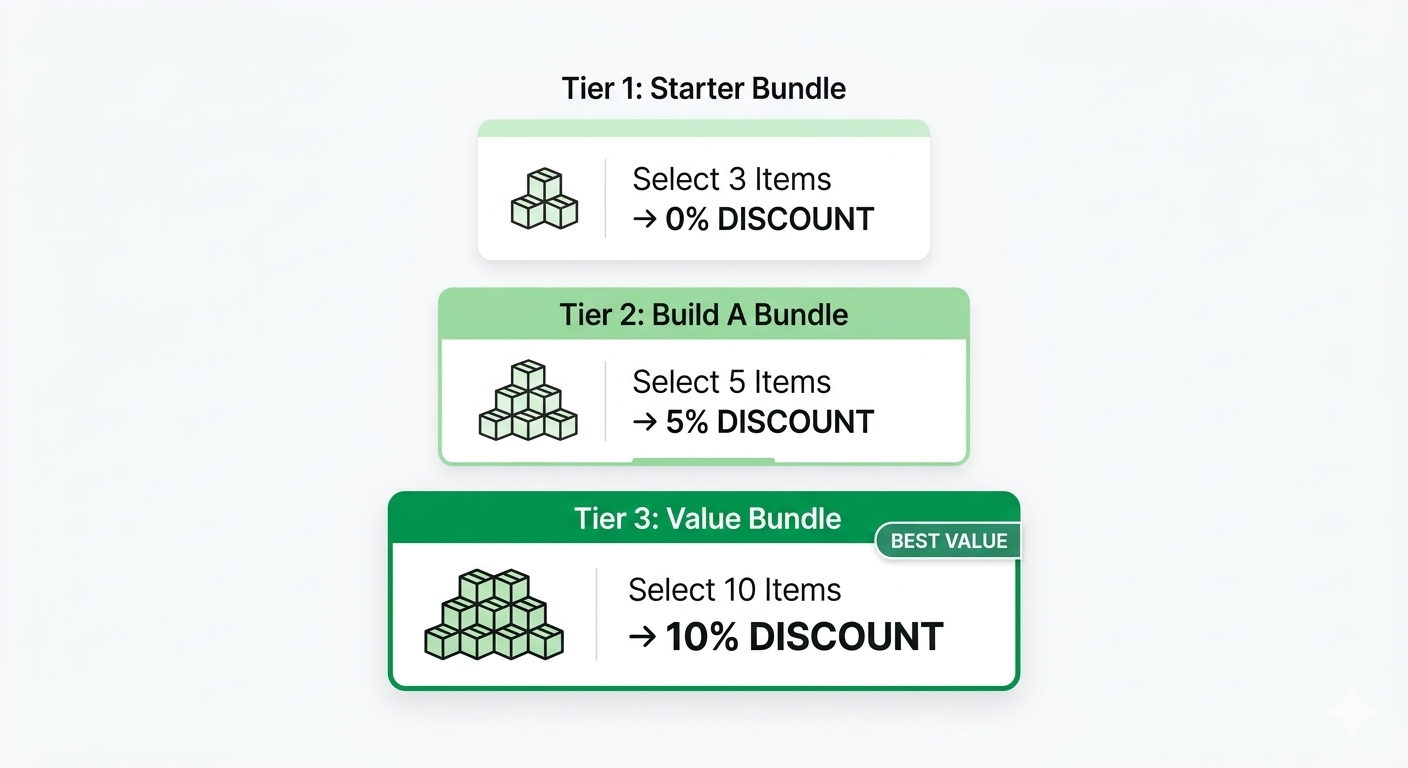
This creates a natural incentive:
Customers start small → then upgrade their bundle size to unlock better value
Placement
The bundle is prominently placed:
- In the top navigation menu
- In the footer menu
This ensures:
- High visibility
- Easy access from anywhere in the store
Customer Experience
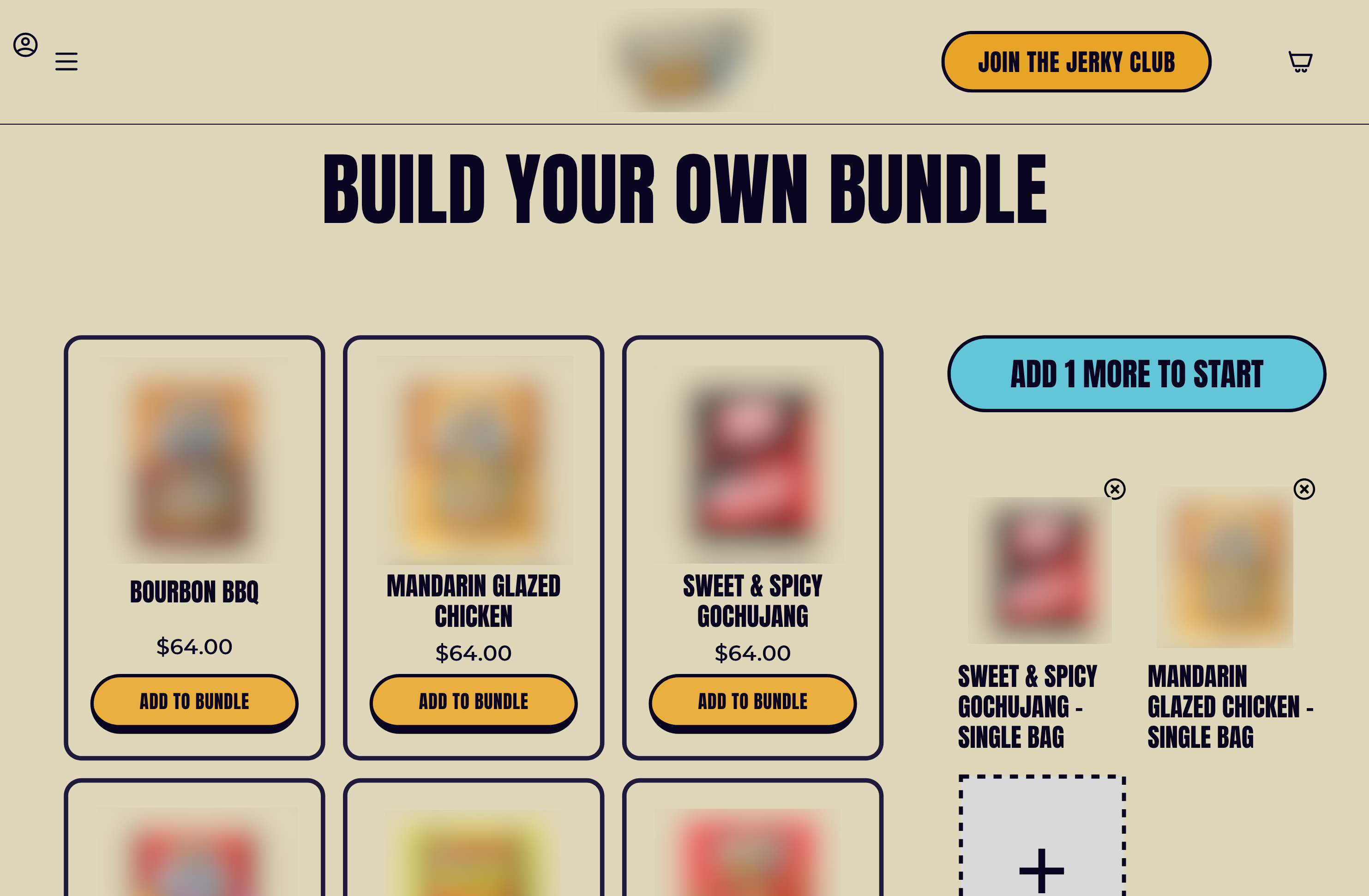
Instead of browsing product pages one by one, customers can:
- View all available flavors in one place
- Mix and match freely
- Build a personalized snack pack
The experience is:
- Simple
- Fast
- Intuitive
Most importantly:
Customers feel in control of their selection, not forced into preset bundles.
Results
Over ~2.5 years, the bundle delivered:
- ~14,000 bundle orders generated
- Average 5–10 items per order
- Typical bundle value: $30–$70
Growth Over Time
The merchant’s success is also reflected in their plan upgrades:
- Started on Basic
- Upgraded to Standard
- Eventually moved to Advanced
This progression was driven by one key factor:
Bundle orders consistently exceeded plan limits
Why It Works
1. Variety Drives Conversion
Customers don’t want just one flavor—they want to explore.
The bundle turns:
- “Which flavor should I choose?”
→ into - “How many flavors should I try?”
2. Tiered Discounts Increase AOV
Instead of forcing discounts, the store uses progressive incentives:
- Small commitment → no discount
- Medium commitment → small reward
- Large commitment → best value
This subtly pushes customers toward larger bundles.
3. Curated Product Pool Reduces Friction
Only 12 products are included.
This is critical:
Enough variety to feel exciting, but not overwhelming.
4. High Visibility Placement
By placing the bundle in:
- Top menu
- Footer
The merchant ensures the bundle is not hidden—it becomes a core buying path.
Key Takeaways for Shopify Merchants
If you're selling products with multiple variants (snacks, supplements, beauty, etc.), this case highlights a repeatable pattern:
✅ Use bundles to sell variety, not just discounts
✅ Keep the product pool curated (10–20 items are ideal)
✅ Use tiered pricing to guide order size
✅ Make the bundle a primary entry point, not a secondary feature
Final Thoughts
This case is a strong example of how a simple bundle structure—without complex logic—can drive long-term results.
You don’t need a complicated setup to scale.
You need the right structure, aligned with how customers actually buy.
If you're looking to implement a similar bundle for your store,
BYOB – Build Your Own Bundles makes it easy to get started.